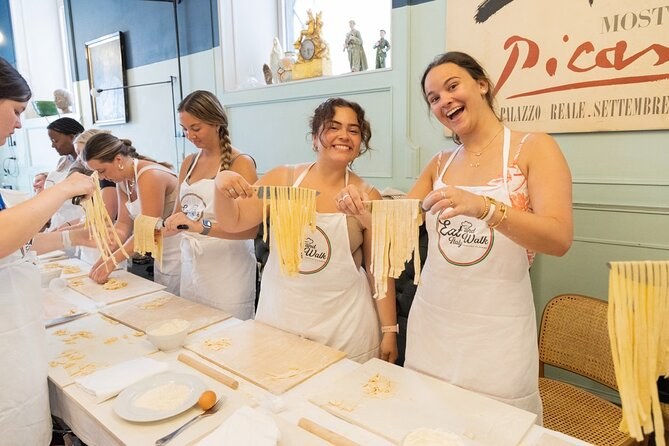
Rome 3 in 1 Cooking Class: Fettuccine, Ravioli & Tiramisu
The class side of the argument: two pastas and a tiramisu from scratch, eaten at the table afterwards.
From $61 per person
Check Availability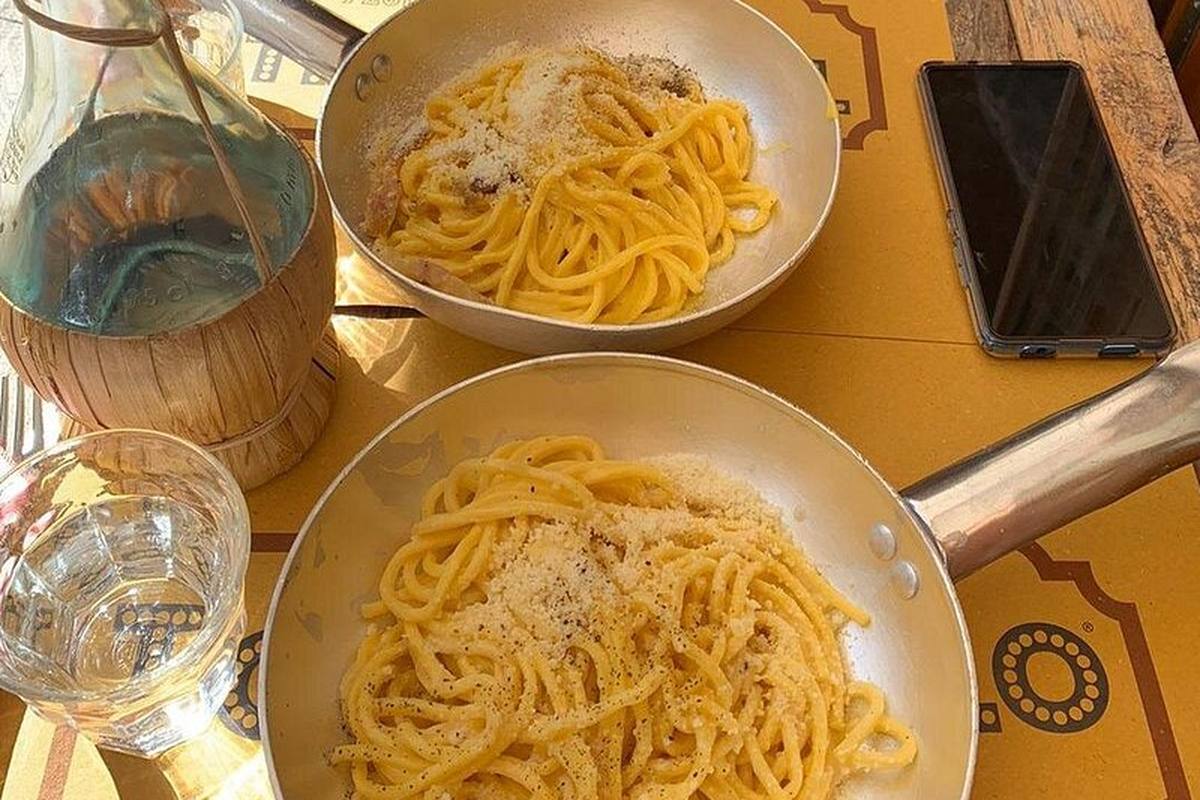
Take the walk if you want to know where to eat for the rest of the trip. Take the class if you want to be able to cook it when you get home. On one free evening, the walk shows you more of Rome and the class gives you more to keep — and the class is usually cheaper.
It is not price, and it is not quality. Both formats here are well reviewed and the bands overlap. The tension is what you are left holding afterwards: a tasting walk hands you a shortlist of places you would never have found, and a cooking class hands you a technique. You cannot buy both on one evening.
Three to four hours, five or six stops, and somebody translating. The wine-led Trastevere routes sit you down for a pasta course halfway through and pour something chosen for it; the street-food circuits keep you on your feet and cover more ground. Either way you finish knowing which counters are worth returning to, which is worth a great deal on a five-night trip.
You also get the city. A walk crosses squares, bridges and ruins between counters, and the landmarks page sets out what each route passes.
Three hours, indoors, in one room. You make the pasta, you make the dessert on most of them, and then you sit down and eat what you made with wine or a soft drink included. One class takes you out of Rome entirely, to a family winery in Frascati, and costs less than any walk on the site.
The thing people underrate is the sitting down. A class ends with dinner eaten, at a table, at a fixed hour — which on a busy trip is worth more than it sounds.
| Tasting walk | Cooking class | Which wins | |
|---|---|---|---|
| Typical fare | $43–$129 | $35–$100 | Class, usually |
| Runs | 2½–4 hours | 3 hours | Even |
| On your feet | 2–4 km on cobbles | None | Class |
| How much you eat | Five to fifteen tastings | A full meal you cooked | Even |
| Drinks | Poured on most; excluded on the street-food walks | Included on every one | Class |
| What you keep | A shortlist of places | Two recipes and the technique | Depends on you |
| See the city | Yes — that is half of it | No | Walk |
| Weather-proof | Runs rain or shine, but you are outside between stops | Completely | Class |
| With children | Short routes only | Almost always | Class |
You are in Rome for a few nights and you do not know where to eat. That is the problem a walk solves, and it solves it in a way no amount of reading does, because the tables are held and the order of the evening is already worked out. Traveller feedback here returns to the same point again and again: the guide made the evening, not the food.
It is also the better choice if you are travelling with somebody who does not want to cook. Nobody is made to do anything on a walk except eat.
You already know how to find dinner, or you are coming back. You want to make carbonara properly, with guanciale and no cream, and be shown why the pasta water matters. And you would rather spend three hours in one warm room than four on wet cobbles in November, when Rome takes 108 mm of rain.
The headline numbers mislead slightly, because they are measuring different things. A $48 street-food walk is two and a half hours with drinks excluded; add two beers at a counter and you are at roughly $54 for the afternoon. A $61 cooking class is three hours with wine or a soft drink, water and an espresso or limoncello already in the fare, and you leave having eaten a full meal.
Compare the walk against dinner instead and it looks different again. Ten tastings with wine at $90 is roughly what two courses and a bottle cost in Trastevere — so you are paying about the same and eating at five kitchens rather than one. That arithmetic is the honest case for the walk, and it stops working the moment you already know where to eat.
From a class, two techniques and a recipe: how to emulsify pecorino and pepper without it seizing, and why the pasta water is the sauce. Several of them send you away with the recipes written down, and one gives you an ebook.
From a walk, a list. The counters, the bakery, the gelateria that is the real thing rather than the mountain of coloured foam next door — and, on the routes that hold tables, the names of restaurants that were full when you walked past them at nine. For a longer trip that list is worth more than a technique; for a shorter one it is worth less.
If you have two free evenings, take the walk first. It will tell you what the dishes are supposed to taste like, and the class two nights later will make more sense for it. Do not book them on consecutive nights unless you have a serious appetite: both are a full meal, and both finish late.
If you cannot walk three hours on cobbles and do not want to spend three in a kitchen, the golf-cart tasting covers three quarters sitting down. If you have a whole day, a food and wine tour rome visitors take out to the hills puts a winery and a farmhouse lunch in it instead. Both are on the Rome Food Tours grid with everything else.
The FAQs cover the practical side of both, and the planning page has the meeting points.
The class side of the argument: two pastas and a tiramisu from scratch, eaten at the table afterwards.
From $61 per person
Check Availability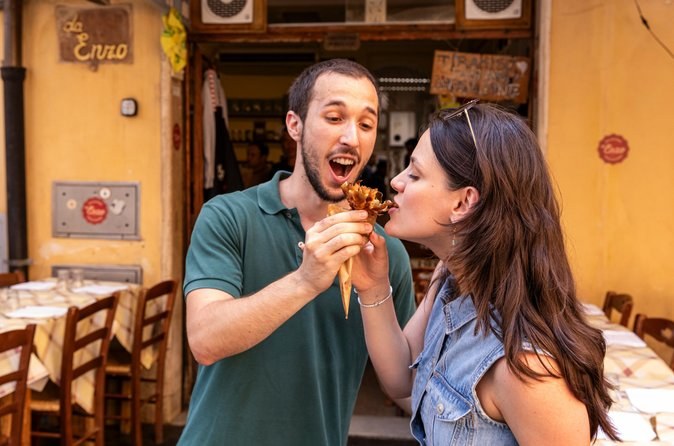
The walk side: six or seven stops across Trastevere after dark, with a seated pasta course in the middle.
From $122 per person
Check Availability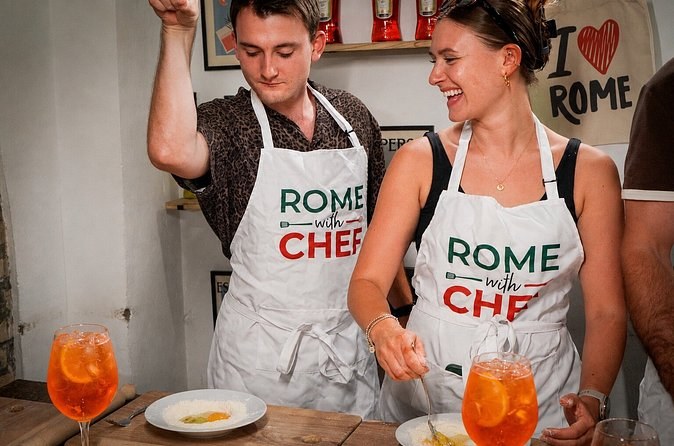
The sociable class, where the three spritzes are mixed by you as well as the pasta.
From $79 per person
Check Availability