Rome Food & Wine Tour: 15 tastings in Trastevere & Jewish Ghetto
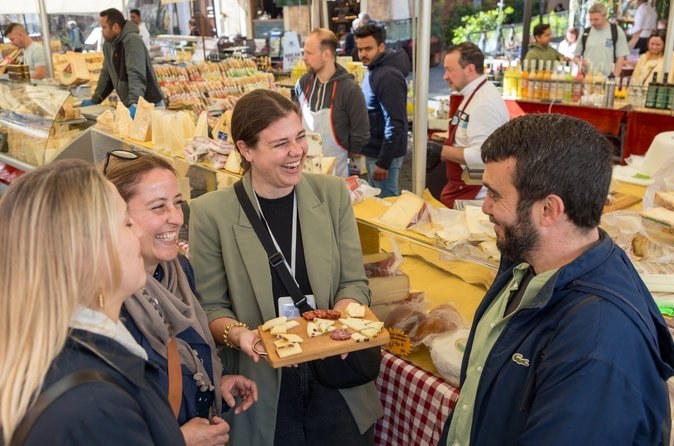
Campo de' Fiori, the Ghetto and Trastevere in one walk, with fifteen tastings and a cookbook to take home.
From $86 per person
Check Availability
Roman food is younger, stranger and better documented than it looks. A papal bull from 1555 explains the city’s most famous fried thing. A hill made of broken jars explains its offal. And its newest street food was invented in 2008, by a named person in a named street.
Carciofo Romanesco del Lazio has held PGI status since 22 November 2002. Its central head — the cimarolo or mammola — is spherical, compact, more than ten centimetres across and, crucially, spineless. That last property is the entire reason you can press one flat and fry it whole.
Carciofo alla giudia comes out of the Roman Ghetto, enclosed in 1555 by the bull Cum nimis absurdum, which Pope Paul IV issued on 14 July of that year. The requirement that Jews live inside it lasted until Italian unification in 1870, and what you are eating is the result of four and a half centuries of cooking in a confined space.
Egg yolk, pecorino, black pepper and the fat rendered from guanciale, loosened with pasta water. Nothing else. Take one of the classes here and you will be taught it by name, and told why.
Gricia is guanciale and pecorino. Add egg and pepper and it is carbonara; add tomato and it is amatriciana; take the pork out and it is cacio e pepe. One walk in Testaccio serves three of them in an afternoon, side by side, which is the only way the difference ever really lands.
Monte Testaccio is an artificial hill made from the broken amphorae of ancient Rome’s river port. Archaeologists still read it, because the jars carry stamps saying what they held and where it came from.
The Mattatoio opened in 1888 and closed in 1975. Workers were paid partly in the fifth quarter: the offal left once the four quarters of a carcass had been sold. Coda alla vaccinara and trippa alla romana are what that became.
Its pavilions along via Aldo Manuzio and via Beniamino Franklin hold MACRO Testaccio, the exhibition hall La Pelanda and university teaching rooms. One food walk spends forty-five minutes on the Via Aldo Manuzio side, at the market next door.
The trapizzino was invented by Stefano Callegari in Testaccio: a triangular pocket of pizza-bianca dough filled with a classic Roman braise. The name merges tramezzino and pizza. It is now sold in several countries.
The full name is supplì al telefono. Break a good one open and the mozzarella in the middle pulls into a long thread between the two halves, like the cord on a wall phone.
The market has run in the square since 1869, and several of these walks meet in it or route through it. If you want the stalls rather than the square, book yourself a morning departure. The market stop disappears from afternoon and Sunday routes.
Giordano Bruno was burned at the stake in the square on 17 February 1600. The bronze is by Ettore Ferrari and was inaugurated on 9 June 1889, forced through by a committee of university students formed in 1876 against the Church’s objection. One tour meets directly under it.
29 June, Santi Pietro e Paolo, is a public holiday in Rome and nowhere else in Italy. Shops, offices and a great many kitchens shut for it. If you are eating in Rome that week, a walk with tables booked ahead is worth more than usual.
Around Ferragosto on the 15th, family-run kitchens shut for a fortnight while their owners leave the city. August is also the hottest month of the year, with a mean daily maximum of 32.7 °C on the 1991–2020 normals.
Not one tour on the best food tours in rome list charges admission to anything, because there is nothing to charge admission to. No food tour here carries a Colosseum ticket or a Vatican Museums ticket either. The one sightseeing product that passes them says outright that entry is not, and could not be, included.
| Fact | Date | Where you meet it |
|---|---|---|
| Roman Ghetto enclosed | 14 July 1555 | The Ghetto evening walks |
| Campo de’ Fiori market | Since 1869 | Street-food walks, morning departures |
| Giordano Bruno statue | 9 June 1889 | One walk meets beneath it |
| Mattatoio built | 1888 | Testaccio walks |
| Mattatoio closed | 1975 | Testaccio walks |
| Artichoke PGI registered | 22 November 2002 | Ghetto routes, February to May |
| Trapizzino invented | 2008 | Testaccio and street-food routes |
Three of them should change what you book. The artichoke’s season means a Ghetto route between February and May is a different tour from the same route in August. If your dates fall on 29 June or the Ferragosto fortnight, a walk with tables booked ahead is worth more to you than on any other day of the year. And since nothing here charges admission, a fare that looks high is buying you food and a guide rather than access.
The rest are the sort of thing a good guide tells you between stops, which is most of what separates a walk you remember from a queue you stood in. Ask yours about the hill of broken jars — you will be standing on the evidence.
The Ghetto dates and the 1555 bull are from the historical record. The artichoke’s protected status is an EU registration with a date on it. The Mattatoio’s architect and its opening and closing years are documented, and the trapizzino has a named inventor, a year and a street.
Each of them is sourced on the page that owns it: the quarters page for the history, the dish page for the food, the calendar for the dates. That is the point of publishing them rather than repeating a story.
Every dish named above is defined on the Roman food page. The quarters are set out rione by rione, and the dates to plan around are on the food calendar. If you would rather taste these than read them, the Rome Food Tours grid sorts every walk that will hand them to you.
Campo de' Fiori, the Ghetto and Trastevere in one walk, with fifteen tastings and a cookbook to take home.
From $86 per person
Check Availability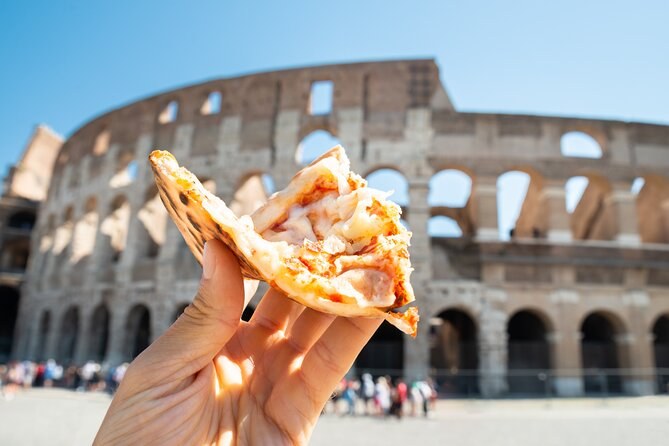
Three and a half hours ending at the Pantheon, the longest street-food route in the city centre.
From $59 per person
Check Availability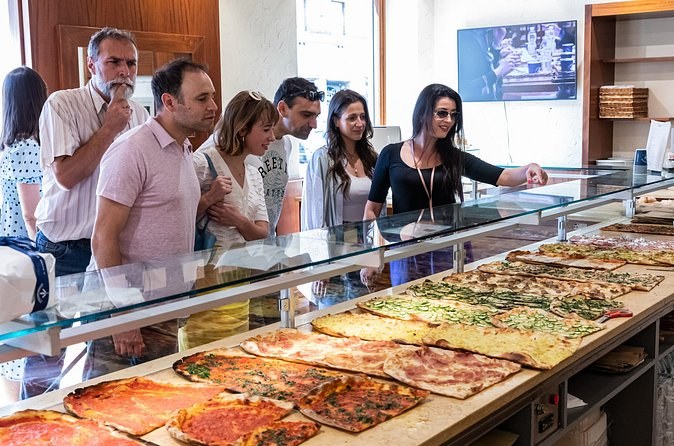
The quarter the slaughterhouse built, with all three Roman pastas and a market stop.
From $128 per person
Check Availability