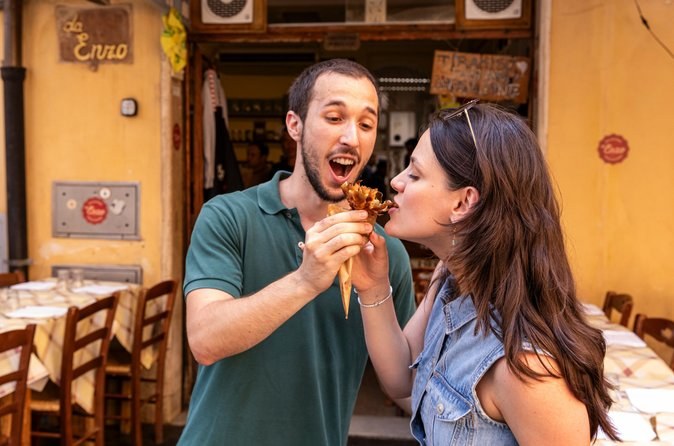
Winner 2026 Rome Twilight Trastevere Food Tour by Eating Europe
The tasting walk: four hours in Trastevere after dark with a seated pasta course and wine pairings.
From $122 per person
Check Availability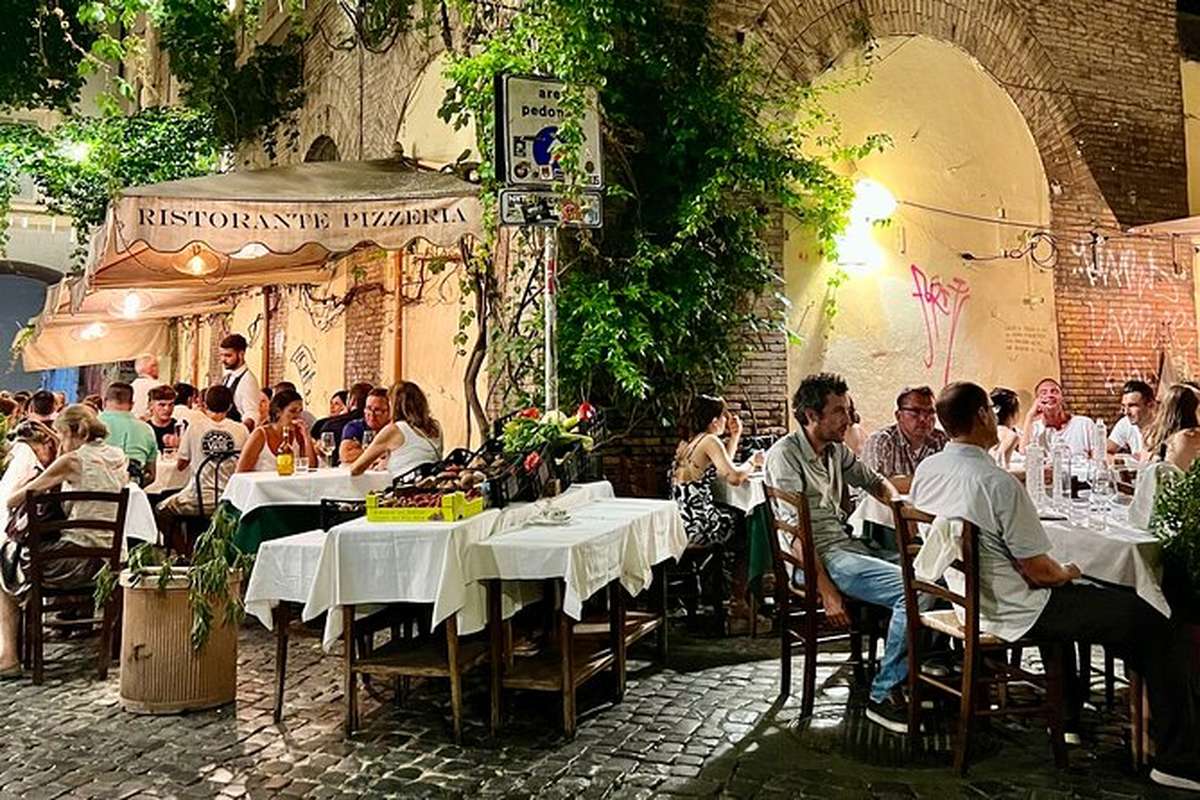
Three formats, and the choice is really about what you want to be holding afterwards. A Trastevere evening gives you a meal and a quarter. A street-food walk gives you more of the map for half the money. A cooking class gives you the technique and never leaves the room. Pick on that, then pick the quarter.
Fares here run from $34 to $223, and sorting by price puts a twelve-hour coach to Tuscany next to a two-and-a-half-hour walk round Campo de’ Fiori as though they were competing. They are not. Almost every comparison a reader makes on a grid like this is between products that answer different questions.
There are three real formats here, and a couple of outliers around them. Work out which format you want first and the grid collapses to a shortlist you can hold in your head.
The tasting walk. Three to four hours, five or six kitchens, a guide, and on most of them a seated pasta course with a wine chosen for it. Trastevere is where these concentrate, and they run after dark.
The street-food circuit. Two and a half to three and a half hours on foot through the centro storico, eating at counters. Cheaper, shorter, covers more ground, and usually leaves the drinks to you.
The cooking class. Three hours at a bench with a chef. You make the pasta, you make the dessert on several, you sit down and eat it with a drink included.
The outliers are worth knowing about: a golf-cart tasting that covers three quarters seated, a golf-cart sightseeing tour that carries no food at all, and a twelve-hour coach day to the Val d’Orcia.
| You are | Format | Typical fare | Runs | Why |
|---|---|---|---|---|
| On your first trip, three nights | Tasting walk | $82–$129 | 3–4 h | It is the meal and the introduction to a quarter at once |
| Counting euros | Street-food circuit | $43–$59 | 2½–3½ h | Same city, half the fare, drinks on you |
| Coming back to Rome | Class, or Testaccio | $35–$129 | 3–3½ h | You already know where to eat; take the technique or the market quarter |
| Travelling with children | Class or short walk | $35–$59 | 2½–3 h | Seated or short; the nine o'clock finish is the real problem |
| Unable to walk far | Golf-cart tasting | $192 | 4 h | Three quarters, sitting down, with a terrace course |
| Travelling in November | Class | $35–$100 | 3 h | 108 mm of rain that month; a kitchen has a roof |
This is the cleanest cut in the whole decision, and most people know their own answer within a second of being asked. A walk hands you a shortlist of counters you would never have found; a class hands you a method you can use at home. You cannot buy both on one evening.
What tips it for a lot of readers is the trip length. On three nights, the shortlist is worth more, because you have two more dinners to place. On a week, the technique wins.
More than the operator, and considerably more than the price. Trastevere is the evening quarter and holds most of the walks. The Jewish Ghetto is where the fried artichoke comes from and works best after dark. Campo de’ Fiori is the morning market. Testaccio cooks offal because a slaughterhouse used to pay its workers in it. Prati is the quiet one, out past the Vatican walls.
Pick the quarter and you have usually picked the tour. The rione guide sets out all five properly.
Three things, all of them printed on the listings and none of them quality. First, whether a seated course is inside the fare or not. Second, how many glasses get poured — the wine-led evenings pour four or more, the street-food circuits often pour none and say so. Third, whether tables are held ahead at each stop, which costs an operator real money on a Friday.
Once you know which of those you want, the band you should be shopping in picks itself. The prices guide does the arithmetic in full.
Not always, but the range here is wide enough to matter. Caps run from seven on the golf-cart tasting to thirty-two on one Prati walk, with most between twelve and fifteen. The number that counts is not the cap in the booking box but the one in the listing’s Additional Info, and on a few products those two disagree.
Twelve is comfortable in a small room. Thirty-two is a different experience, and one reviewer here says exactly that: the food was good and the guide was hard to hear at the busier counters.
Several of them run more than one route, and the differences between their own products are usually clearer than the differences between companies. One operator runs both the twilight Trastevere evening and the Testaccio market walk; another runs three Prati and Trastevere routes at three price points. Read the inclusions rather than the brand.
One thing worth knowing: a few routes share a meeting point and a stop list between operators, because they are the same walk sold twice. If a pair of listings both meet at Piazza Mastai and both name the same five venues, you are choosing on price and group size, not on itinerary.
Three to five days ahead between April and October, one or two the rest of the year. The evening Trastevere departures close first, because they are the ones holding tables on the busiest nights.
Booking early costs you nothing. Every tour here refunds in full up to twenty-four hours ahead, which is long enough to watch a forecast and change your mind.
If you already know Rome well and have a list of places, a walk is buying you something you own. If you are here for two nights and one of them is already committed, a four-hour evening is a lot of your remaining time. And if you have a severe allergy, several of these operators state plainly that they cannot take you, which is a good reason to eat where you can talk to the kitchen directly.
That argument is worked through properly in the channel guide, which takes the case against booking as seriously as the case for it.
Durations cluster at two and a half, three and four hours, and the gap between the ends of that range is most of an evening. A two-and-a-half-hour street-food circuit is something you fit into a day. A four-hour Trastevere walk is the day’s main event, and anything you book for later you will be late for.
Three hours is the middle, and it is where the cooking classes sit: long enough to make two things properly, short enough to leave you a night. The one real outlier runs twelve hours, because it is a coach into Tuscany and back with lunch in the middle of it.
Read the finish time rather than the duration. A six o’clock start on a four-hour walk puts you back on the street at ten, which is an ordinary Roman hour and a late one if you are flying at six the next morning.
Ask before you book, and ask the operator rather than hoping on the night. The listings fall into three groups and they are unusually blunt about which one they are in. Some offer substitutions outright — one names vegan, vegetarian, gluten-free and lactose-intolerant options and asks you to flag it at checkout. Some will adapt within limits and want an email first.
And some say no. One class states that it cannot take participants with coeliac disease or a vegan diet, because of the menu it teaches. Another cannot work around lactose, since dairy is in everything it makes. A Trastevere walk says in its own words that it cannot accommodate gluten-free intolerances, and a wine-led evening rules itself out for severe or life-threatening allergies.
Gluten is the one to check hardest. One pasta class will give you gluten-free pasta on request and tells you plainly that it cannot rule out cross-contamination from the wheat flour in the room. That is a straight answer and it is worth more to you than a vague one.
It matters more than you would expect, because the meeting point sets how your evening opens and where it leaves you standing. Trastevere departures gather at Piazza Trilussa, at Piazza Mastai or at the church on Piazza di San Francesco d’Assisi. The centro storico walks start at Campo de’ Fiori, several of them under the statue of Giordano Bruno, or at Largo di Torre Argentina. The Prati routes meet on Via Cipro, out past the Vatican walls.
Trastevere has no metro station. Tram 8 from Piazza Venezia is how you get over the river and it takes about ten minutes, so a six o’clock meeting point means leaving the middle of the city at half past five.
Book something that starts near where you are sleeping if the rest of the choice is close. Planning your visit lists every meeting point with what it looks like when you arrive, because “beside the cafe” is not much help at dusk in a crowd.
Whichever it is, the Rome Food Tours grid sorts by rating against review volume and the FAQs cover the practicalities. If you want the detail on one format, the Trastevere evenings, street-food walks and cooking classes each have a page of their own.
The tasting walk: four hours in Trastevere after dark with a seated pasta course and wine pairings.
From $122 per person
Check Availability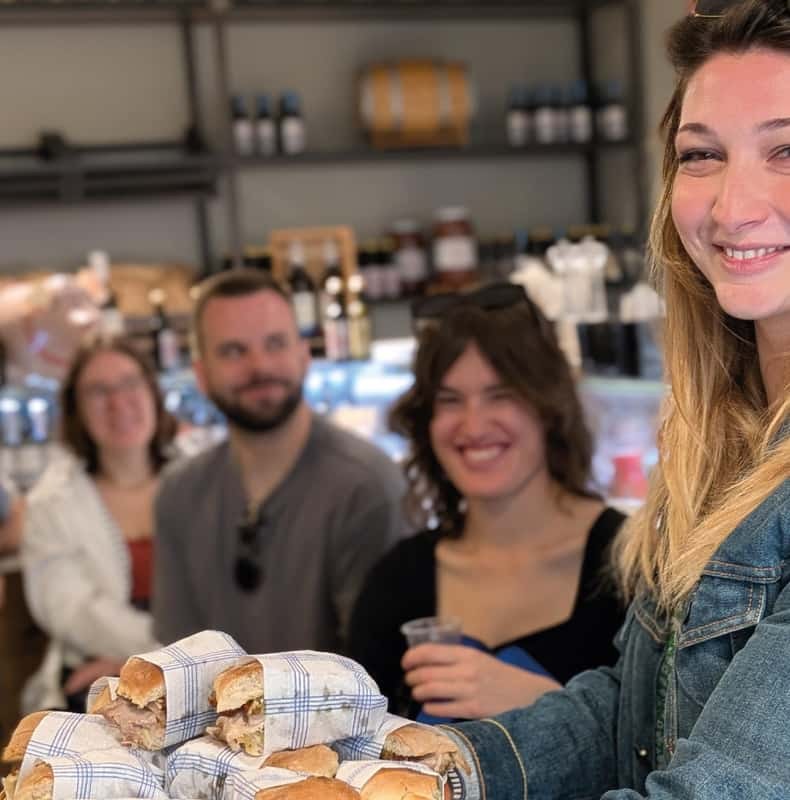
The street-food circuit: two and a half hours from the market across the river, drinks excluded.
From $48 per person
Check Availability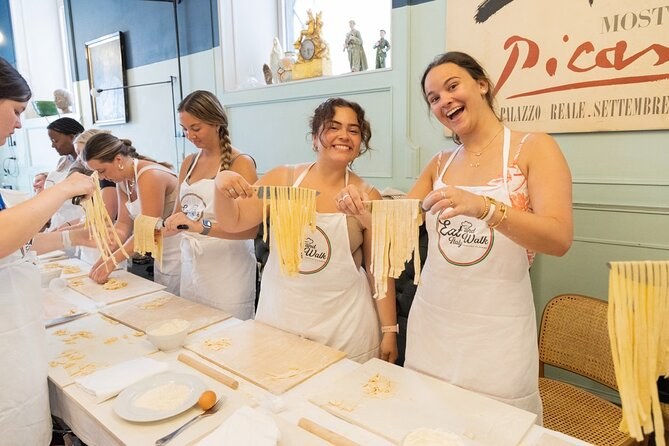
The kitchen: three hours making two pastas and a tiramisu, then eating them.
From $61 per person
Check Availability