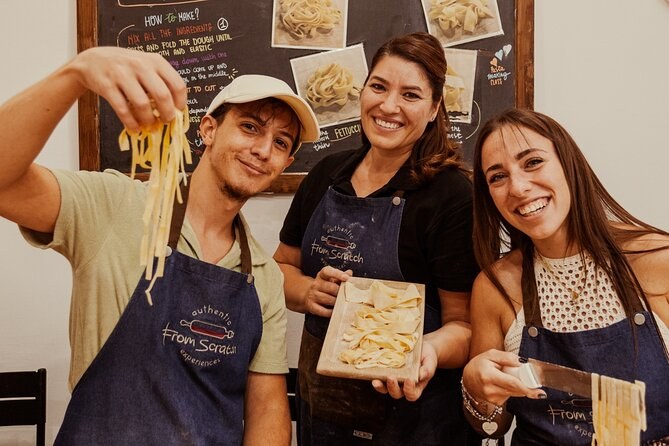
Pasta Making & Wine Tasting with Dinner in Frascati from Rome
The floor: a winery, a pasta session and dinner in the hills, for less than a main course in the centre.
From $34 per person
Check Availability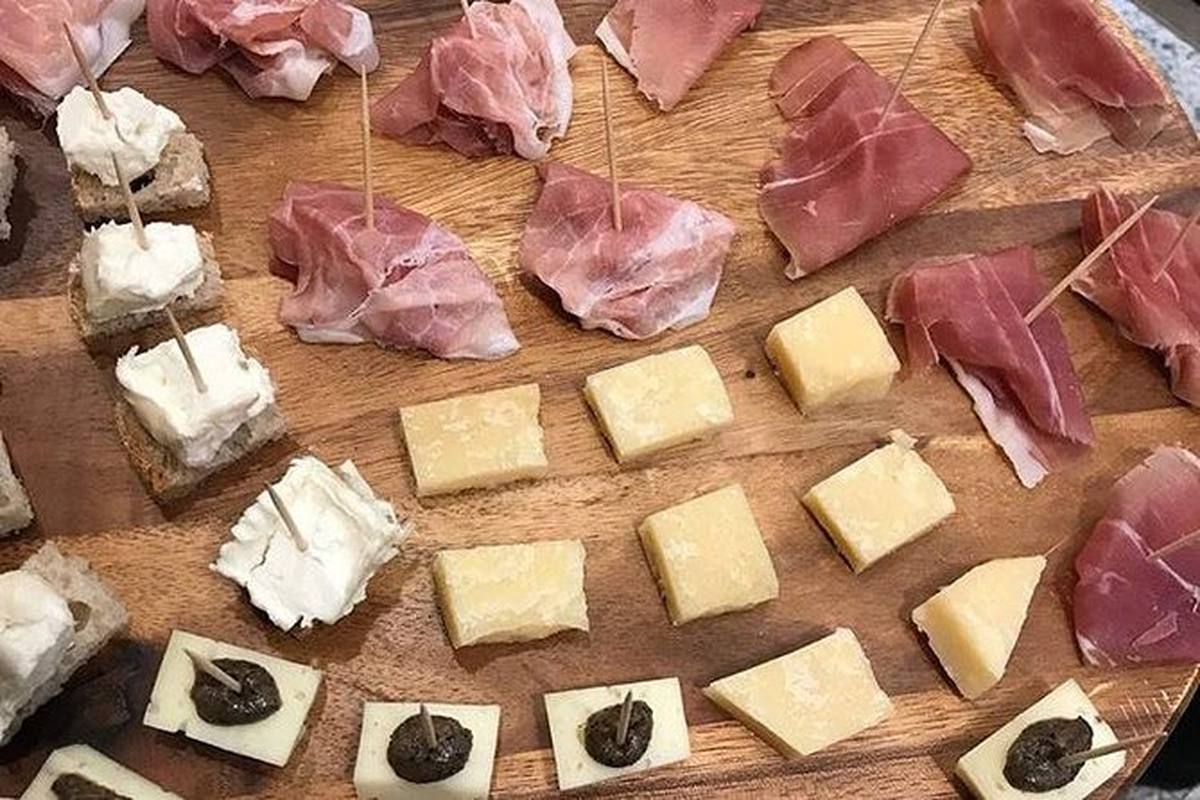
Fares run from $34 to $223. Three things move the number and none of them is quality: whether a seated course is inside the fare, how many glasses get poured, and whether tables are held ahead. Work out which of the three you want and the band picks itself.
$34 at the bottom — a pasta session, a winery and dinner in Frascati, reached by train. $223 at the top, for a private golf cart that carries no food at all. Between those, the walking tours run $43 to $129 and the cooking classes $35 to $100.
Most readers are choosing inside a band of about forty dollars, which is where the interesting question lives.
| Format | Band | Seated course | Drinks | Tables held |
|---|---|---|---|---|
| Kitchens and standing circuits | $35–$59 | Class: yes. Walk: no | Class: yes. Walk: usually not | Not needed at counters |
| Mid-band walks and kitchens | $60–$90 | Often | Usually poured | On several |
| Wine-led evenings, Testaccio | $90–$130 | Yes | Four glasses or more | Yes, stated |
| Golf cart and private walks | $130+ | Yes, on a terrace | Four drinks | Yes, plus transport |
"Drinks", in an exclusion column. The short standing-up circuits tend to put it there; every wine-led evening pours four glasses or more. Buying your own at a counter is two or three euros a stop, so the real gap is smaller than the fare suggests — but it is not nothing, and a price comparison that ignores it is comparing different afternoons.
It depends what it replaces. If a walk includes a full pasta course or a three-course dinner, you are not paying for a tour and a dinner — you are paying for a tour that is dinner. Against a restaurant meal in Trastevere with wine, the arithmetic is close to even.
If you were going to eat somewhere cheap afterwards anyway, it is not worth forty dollars, and a street-food circuit plus a pizza is the better buy.
Because they are usually not the same product, even when they share a square. Group size is the commonest reason: a walk capped at twelve costs more per head than one capped at eighteen, and considerably more than one capped at thirty-two.
The second reason is the pour. Free-flowing wine is a real cost to an operator, and the listings that offer it price accordingly. The third is priority service, which is worth what it costs on exactly one night of the week and nothing on the others.
They mean the operator is running an offer, and the figure in the booking box is the figure you pay. Several of these listings are discounted at the time of writing, with an end date printed beside the reduction. Prices here are a snapshot taken on 2026-09-13; what the checkout says is what counts.
A street-food circuit in the afternoon, at somewhere between $43 and $59. You get two or three quarters, a guide for two and a half hours, and five or more tastings, and you buy your own drinks along the way.
The other cheap door is the Frascati evening at $34, which is the lowest fare anywhere here. It costs you a train ride out of the city and gives you a pasta session, a winery and dinner — genuinely more food than the price suggests.
What you should not do is buy the cheapest thing in a format you did not want. A $48 walk that leaves you hungry at eight has not saved you money, because you will then buy dinner.
No. Fares here do not move with how far ahead you book, and there is no early bird discount hiding behind a date field. What changes is availability: the twelve-seat Trastevere evenings sell out first in high season, and what is left in June on the day is not what you would have chosen in May.
Promotions are a separate thing and they do move. Several listings carry a reduction with an end date printed beside it, and when that date passes the fare goes back up. Since you can cancel free up to twenty-four hours ahead, booking a discounted departure early costs you nothing and protects the price.
It is optional. Tipping is not expected in Italy the way it is in the United States, and many of these listings state that gratuities are not included rather than that they are required. A few euros a head for a guide who made the evening is generous and entirely normal.
The coperto is separate and is not a tip. It is a legal per-person cover charge for bread and service, printed on the menu, usually one to three euros, and you will meet it on the nights you are eating without a guide.
Around the $100 mark on a walking tour. Above that you are buying wine, group size and service rather than additional plates — and on the golf-cart products, transport. That is not a criticism: on a Friday evening in Trastevere, service and a held table are the scarce things.
Below $50, you are buying food and a guide and nothing else, which for a great many travellers is exactly the right purchase. If you want to know where the line sits for your own trip, work out what you would otherwise have spent on dinner that night and compare the two numbers directly.
Less than most visitors expect, if you eat the way the city does. Pizza al taglio is sold by weight, so a filling slice is two or three euros. A supplì is around two. A maritozzo with a coffee is a few euros standing at the counter, and standing is cheaper than sitting almost everywhere.
Dinner is where it changes. A trattoria in Trastevere with a pasta, a secondo and a quarter-litre of wine lands somewhere in the twenties per person, plus the coperto. That is the meal a tasting walk is genuinely competing with, and it is why the wine-led evenings price where they do.
Budget roughly thirty to forty euros a day for food if you are eating well without booking anything. Against that, a $122 evening is a real decision rather than a rounding error, and it should buy you something the thirty-euro day cannot.
Sometimes, and the arithmetic is worth doing. A few listings are quoted per group rather than per person, which means the number you see is the whole cost however many of you turn up within the limit. Divided by four, a headline fare that looks enormous can land below the small-group price per head.
Divided by two it rarely does. A couple is almost always better off in a shared group, where the fare is per person and the cap keeps the evening sociable.
The other thing a private booking buys is pace. You stop when you want, you ask as many questions as you like, and nobody is waiting. On a walk capped at thirty-two, that is not on offer at any price.
| Format | Typical fare | Hours | What you eat | Value verdict |
|---|---|---|---|---|
| Street-food circuit | $43–$59 | 2½–3½ | Five to fifteen tastings, standing | Most food per dollar |
| Cooking class | $35–$100 | 3 | What you made, sat down, with a drink | Most skill per dollar |
| Tasting walk with wine | $82–$129 | 3–4 | A seated course and four-plus glasses | Replaces dinner outright |
| Golf-cart tasting | $192 | 4 | Three quarters, seated, terrace course | Transport, not plates |
| Day trip with lunch | $117 | 12 | Farm lunch and a cellar tasting | A day out, not a meal |
On plates alone the street-food circuits win, and it is not close. On what you still have a week later, the class wins. On the evening itself, the wine-led walk does, because it is the only one that ends with you sitting down.
Run those five against a pair of listings and the price difference usually explains itself. If it still does not, you are looking at products that do different jobs, and the cheaper one is not the better buy.
The decision guide works from the other end, and a food and wine tour rome sits at the top of the walking band for the reasons above. Everything is on the Rome Food Tours grid.
The floor: a winery, a pasta session and dinner in the hills, for less than a main course in the centre.
From $34 per person
Check Availability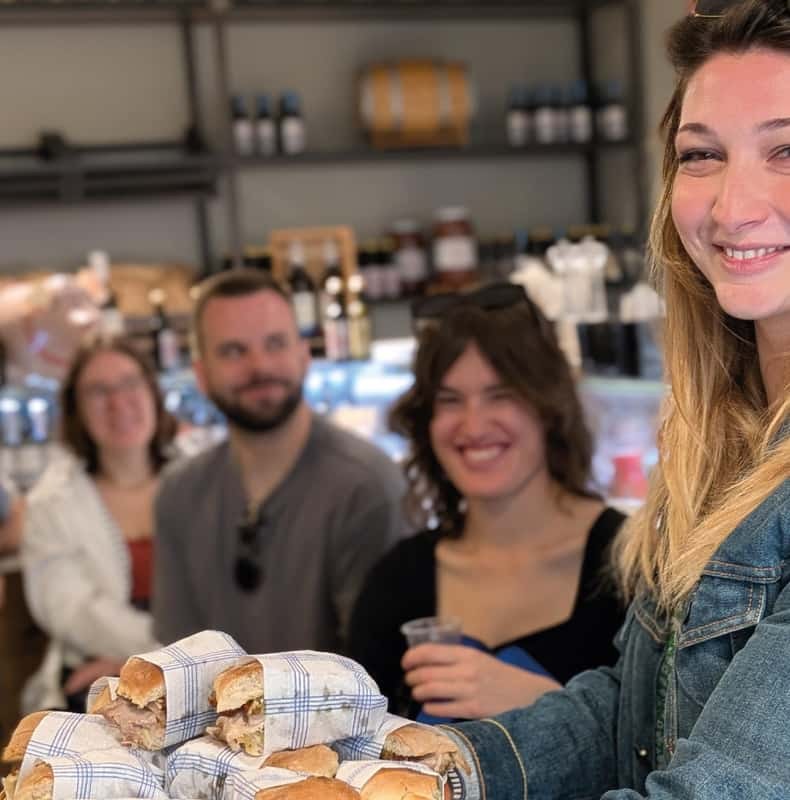
The middle: two and a half hours, two quarters, food included and drinks on you.
From $48 per person
Check Availability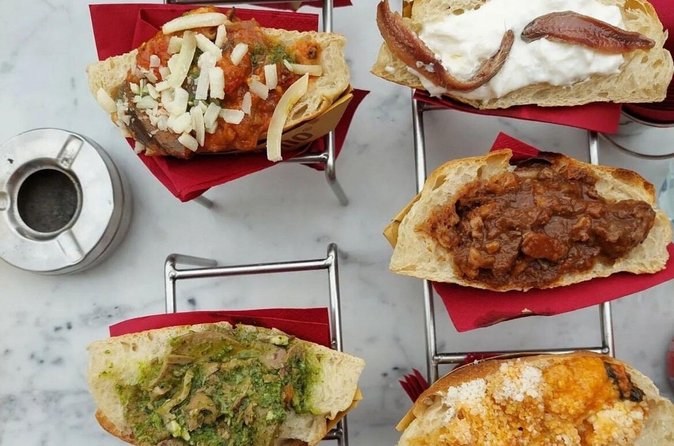
The top of the walking band: four hours, a seated dinner and free-flowing wine with Barolo among the pours.
From $116 per person
Check Availability