Rome Food & Wine Tour: 15 tastings in Trastevere & Jewish Ghetto
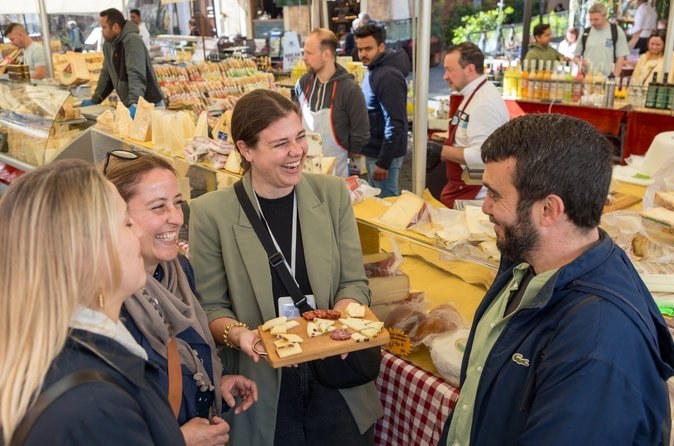
Campo de' Fiori, the Ghetto and Trastevere in one walk — the artichoke route between February and May.
From $86 per person
Check Availability
September and May are the best months to eat in Rome. February to May is artichoke season. August closes a fortnight of family kitchens around Ferragosto and runs at 32.7 °C. November is the wettest month at 108 mm, which is the month a cooking class beats a walk.
More than the operator does. Two things move with the calendar and both are decisive: what is on the plate, and what is open. A Ghetto route in March serves you the fried artichoke it is famous for; the same route in August does not. A Trastevere evening in the fortnight around Ferragosto is walking past shutters that were open in June.
The temperature matters too, but less than people expect, because the tastings themselves are indoors. What the heat changes is the hour you should be walking, not whether you should walk.
Roughly February to May, best in March and April. The dish depends on the Roman artichoke — Carciofo Romanesco del Lazio, which has held European protected status since 22 November 2002 — and specifically on its central head, the cimarolo: spherical, more than ten centimetres across and spineless, which is why it can be pressed open and fried whole.
Outside the season you will be offered a preserved version or something else entirely, and a guide who is honest will say so. If carciofo alla giudia is why you are coming, come in March.
A great deal of the family trade. Around Ferragosto on 15 August, small kitchens shut for a fortnight while their owners leave the city. It is also the hottest month of the year, with a mean daily maximum of 32.7 °C on the 1991–2020 normals.
The tours still run. What changes is that the counters your guide can reach are the ones that stayed open, and that an evening departure stops being a preference and becomes the only sensible booking.
| Month | Day temp | Rain | On the plate | Book |
|---|---|---|---|---|
| January | 12.6 °C | 65.6 mm | The frying season opens | Anything; the city is quiet |
| February | 13.8 °C | 62.8 mm | First artichokes, Carnevale frappe | A Ghetto route |
| March | 16.8 °C | 58.6 mm | Artichokes at their best | A Ghetto route |
| April | 20.0 °C | 68.6 mm | Artichokes, abbacchio at Easter | Book early; Easter fills |
| May | 24.8 °C | 56.9 mm | Late artichokes, first summer produce | Anything outdoors |
| June | 29.5 °C | 30.1 mm | Summer produce | Evenings; avoid the 29th |
| July | 32.6 °C | 19.8 mm | Cold cuts, gelato | Evening departures only |
| August | 32.7 °C | 30.2 mm | Whatever stayed open | A guided evening |
| September | 27.9 °C | 64.9 mm | Late-summer markets, new wine | The best month of the year |
| October | 22.8 °C | 88.1 mm | New oil, mushrooms | A wine-led walk |
| November | 17.1 °C | 108.2 mm | Autumn cooking | A cooking class |
| December | 13.2 °C | 98.3 mm | Christmas Eve fish, New Year lentils | Book weeks ahead |
September, on both the numbers and the plate. High twenties, 64.9 mm of rain, the city back at work after the August exodus, and the markets full of late-summer produce with the new oil and new wine just behind it. May is the close second and has artichokes at the end of their run.
The worst is not August, which people expect, but late November into early December: wettest, greyest, and with nothing seasonal to compensate. If those are your dates, book a kitchen rather than a route, and treat the rain as the reason you are learning to make pasta instead of standing in it.
The Roman winter has its own calendar of fried things and it is not a consolation prize. Sant’Antonio Abate on 17 January traditionally opens the season. Carnevale, which moves, fills the bakery counters with frappe and castagnole for about three weeks. And on 19 March, San Giuseppe brings bignè — choux buns filled with pastry cream, and in the older version fried rather than baked.
January and February are also the cheapest and quietest weeks of the year to take a tasting walk. Kitchens that turn you away in October have a table at eight.
For one dish, yes. Carciofo alla giudia is the one dish with a hard season and a protected variety behind it, and it is genuinely different from anything else you will eat in Italy. If it is the reason for the trip, March.
For everything else, no. The four Roman pastas are made year-round, the street food is a permanent fixture, and the cooking classes run whatever the weather is doing outside. Come when the flights are cheap, book the format that suits the month you land in, and you will eat well in any week of the year.
Less than the format does, which surprises people. A tasting walk is priced on what is in the fare rather than on the month, so a Trastevere evening in February costs roughly what it costs in June.
Where the season shows up is in availability and in promotions. Winter departures are easier to get, small groups fill more slowly, and the reductions that appear with an end date beside them are more common when demand is thin.
The bigger seasonal saving is the rest of your trip. Flights and rooms in January and February cost a fraction of what they do in May, and the food is arguably better because the frying season and the first artichokes are both running. If you are deciding on total cost rather than on fare alone, winter is the answer. The prices guide has the bands in full.
It goes ahead. Plenty of these listings state in their own words that the tour runs rain or shine, and most of the tastings are indoors anyway — the rain only touches the walking between them. Operators reserve the right to swap a stop, which is normal.
If the forecast is genuinely bad and you would rather not, every tour here refunds in full up to twenty-four hours ahead. The weather page has the month-by-month figures.
It moves it. July and August run at 32.6 and 32.7 °C as a mean daily maximum, and the centro storico holds that heat in stone until well after dark. An afternoon of walking between counters in that is not pleasant, however good the counters are.
What saves the summer is that most of the eating happens indoors. You are in and out of shops, cellars and dining rooms, and the exposure is the walk between them. An evening departure removes almost all of it.
If you are coming in high summer, book something that starts at six or later, carry water, and treat a midday slot as a mistake rather than a bargain. A cooking class is the other way out: three hours in a kitchen with the heat under your control rather than over your head.
Four, and they are worth planning around if the dates line up. On 17 January, Sant’Antonio Abate traditionally opens the frying season. Carnevale moves each year and fills the bakery counters with frappe — fried ribbons dusted with sugar — and castagnole for about three weeks before Lent.
On 19 March, San Giuseppe brings the bignè: a choux bun filled with pastry cream, baked now and fried in the older version. At Easter the tables turn to abbacchio, young lamb, and to the flat cheese bread that goes with it.
The one to write down is 29 June. Santi Pietro e Paolo is a public holiday in Rome and nowhere else, shops and offices close, and a procession takes place at St Paul’s Outside the Walls. If you are in the city that day, a walk with tables held ahead is worth considerably more than your own judgement of which door is open. The food calendar has the full year.
For eating, yes — more than for anything else you might come to Rome for. January and February are cold rather than freezing, with mean daily maxima around 13 °C, and the rain is well below the autumn peak. The queues are gone and the kitchens have time for you.
You also get the frying season, the first artichokes from February, and the Carnevale counters. That is a better winter menu than most Italian cities can offer, and it costs less than the same trip in May.
What you give up is the terrace. Evening walks in January finish in the cold, outdoor tables are folded away, and the light goes early. If the picture in your head is a long dusk in Trastevere, come in September instead.
The food calendar lists the dates and what each one puts on the plate, and a walking food tour rome in the right month is on the Rome Food Tours grid.
Campo de' Fiori, the Ghetto and Trastevere in one walk — the artichoke route between February and May.
From $86 per person
Check Availability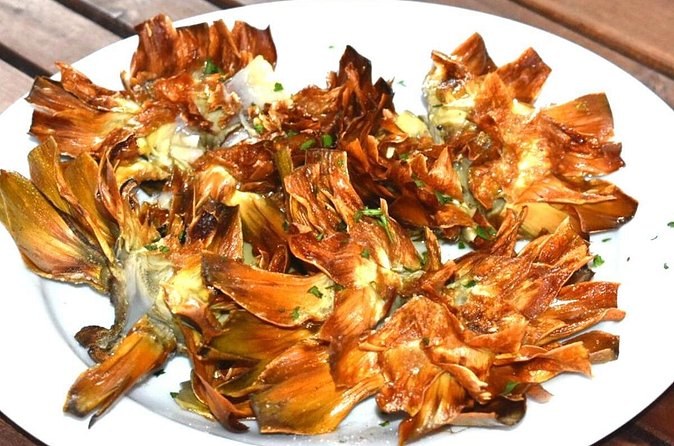
The Ghetto after dark, when the day trippers have gone and the fryers are still going.
From $105 per person
Check Availability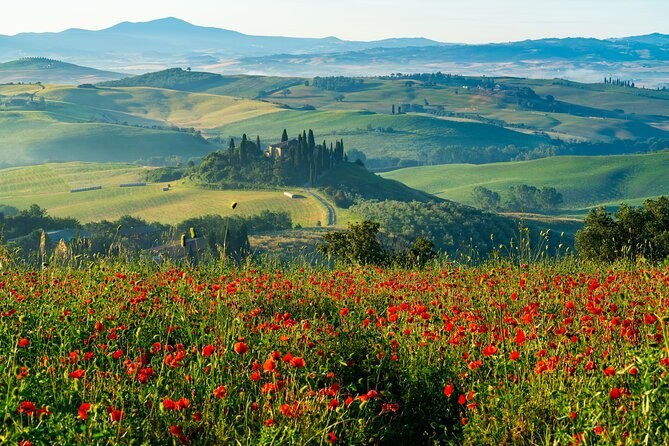
The harvest-month option: a farm lunch in the Val d'Orcia and a tasting that includes Brunello di Montalcino.
From $117 per person
Check Availability