Rome Food Tour by Night in the Jewish Ghetto & Campo Marzio with Wine Tasting
Four hours that start at the Turtle Fountain and walk the Ghetto first, with dinner, more than ten tastings and wine in the fare.
From $105 per person
Check Availability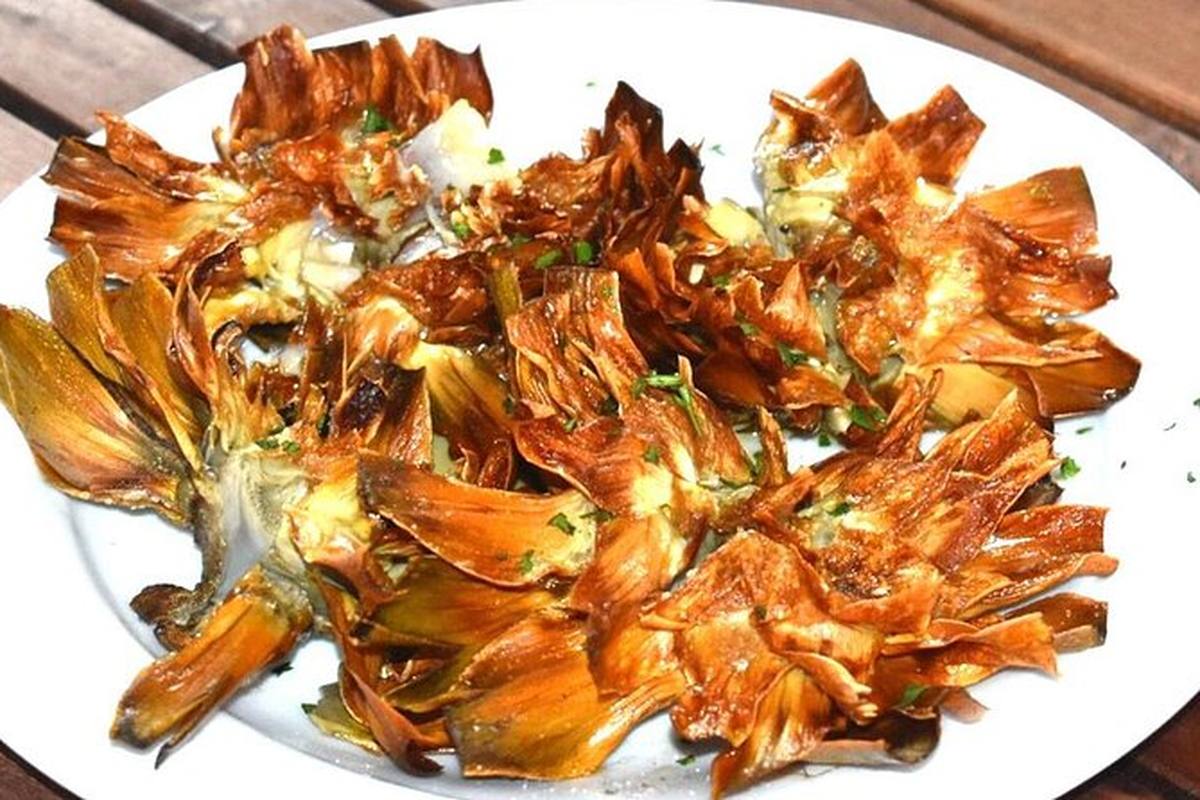
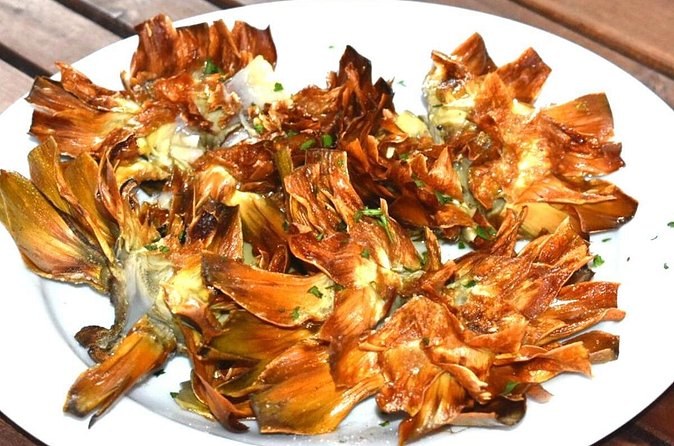
Jewish Ghetto Rome food is Roman-Jewish cooking: carciofo alla giudia, a whole artichoke fried until the leaves crisp, then fried cod fillets, squash blossoms, a baked anchovy and endive pie and a ricotta and sour cherry tart. The quarter is a few streets in Rione Sant’Angelo, facing Tiber Island. Its kosher kitchens close for Shabbat, and the artichoke is a February-to-May dish.
The route matters more than the name. A walk can carry the quarter in its title and still sell you a shorter option that leaves it out: the two-hour option of the Campo de’ Fiori, Ghetto and Trastevere walk drops the Ghetto, the fried artichoke, the pasta and the wine. Check which option you are paying for before you book.
| Walk | Length | In the Ghetto | Drinks in the fare | From |
|---|---|---|---|---|
| Rome: Eat Like a Local Street Food Tour - Historic Center | 2 hours 30 minutes | Fried artichoke stop | Not included | $43 |
| Rome Street Food Tour Eat Like a Local | 2 hours 30 minutes | Walks through | Not included | $52 |
| Rome Street Food Tour with Local Guide | 2 hours 30 minutes | Ghetto and Portico of Octavia | Wine and beer | $55 |
| Rome: Ultimate Street Food Tour in the Old Town | 3 hours 30 minutes | Roman Ghetto leg | Alcoholic drinks, water | $59 |
| Rome: Trastevere Ultimate Food Tour | 3 hours | Along the Portico d’Ottavia | Alcoholic drinks, water | $76 |
| Rome Food & Wine Tour: 15 tastings in Trastevere & Jewish Ghetto | 2 hours to 3 hours 30 minutes | Ghetto and Portico of Octavia; not on the 2-hour option | Wine | $86 |
| Rome Food Tour by Night in the Jewish Ghetto & Campo Marzio with Wine Tasting | 4 hours | Starts here, at the Turtle Fountain | Wine, beer, soft drinks | $105 |
Three of the meeting points you will need, Piazza di San Simeone, Piazza Farnese and Piazza Mattei, are set out on the planning page.
Roman-Jewish cooking is a family cuisine handed down over centuries: inexpensive, seasonal ingredients, prepared under the rules that make food kosher. The Ghetto was enclosed in 1555 and opened for good in 1870, and these are the dishes you will find on its menus.
This is the dish the quarter is known for: a whole, spineless Roman artichoke, salted, peppered and fried fully immersed in boiling oil until the leaves crisp. If you see it on a menu, order it first. It is a February-to-May dish, best in March and April, so check the artichoke season against your dates before you build an evening around it.
Crisp fried cod fillets, and one of the four things Rome’s tourism office says people come to the quarter to eat. When the artichoke is out of season, this is the fried dish you order in its place.
Squash blossoms stuffed with mozzarella and anchovies, then fried in batter. If you do not eat fish, say so before you order: the anchovy is inside the flower, where you cannot see it.
A baked pie of fresh anchovies and endive in alternating layers, seasoned with garlic and oil and left in the oven for about 40 minutes. Rome’s tourism office calls it an ancient delicacy. You can eat it warm or cold.
A shortcrust tart with a layer of sour cherry jam and a layer of sweetened ricotta under a pastry lattice. Rome’s tourism office sends you to the historic bakeries of the old Ghetto for the original, and names the Boccione pastry shop for it.
Meat cut into strips and dried. That is the whole of it, and it sits on the city’s own list of Roman-Jewish dishes beside the artichoke.
Sweetbreads with chickpeas. Rome’s tourism office traces the dish to the Jewish tradition of the fifth quarter: the offal left once the four quarters of a carcass are sold. If you have eaten offal in Testaccio, you will recognise the idea.
Aubergine caponata, the vegetable dish on the same list. It is the plate to add when your table has ordered three fried things in a row.
Two more from that list are worth knowing by name: polpettone di patate e tonno, a potato and tuna loaf, and the braided bread baked for Shabbat.
Some of it, and you can tell which. The Jewish Community of Rome publishes its list of certified kosher restaurants and marks each one meat (carne) or dairy (latte), never both. Five of the addresses on it are on Via del Portico d’Ottavia and one is on Piazza Cenci.
Not every trattoria in the quarter is on that list. No walk listed here describes itself as kosher, and one routes through a norcineria, a pork butcher’s, before it reaches the quarter. If you keep kosher, eat from the Community’s list rather than on a general tasting walk.
An evening walk meets at the Turtle Fountain and takes you through the quarter first, with dinner and wine in the fare.
Three things decide your date.
Rome’s own feast days and closures are on the food calendar.
The Portico d’Ottavia is the ruin you will eat beside. Augustus rebuilt it between 27 and 23 BC for his sister Octavia. Rome’s main fish market traded under its colonnades until the end of the 1800s, and from 1555 one corner of its gateway was a corner of the enclosure.
The Turtle Fountain on Piazza Mattei, built between 1581 and 1588, is where the evening walk meets. The Great Synagogue of 1904 has the Jewish Museum inside: admission is €12 and covers the synagogue visit. No food walk here includes it, and the evening walk’s listing excludes the Synagogue interior, so you visit on your own and not on a Saturday. The landmarks page covers what else the routes pass.
On your own works. The quarter is small and free to walk, and the eight dishes above are on menus in plain sight, so a list and a free evening are enough.
A guide changes two things. A walking food tour rome route strings the Ghetto together with Campo de’ Fiori and either Trastevere or Piazza Navona in one evening, and it tells you why the artichoke is fried here. The street-food walks are the cheap way in, and the cheapest of them leave you to buy your own drink. The routes that finish over the river are among the Trastevere evenings.
If you are still choosing a format, the decision guide sets a tasting walk against a street-food circuit and a class. To see how the Ghetto compares with Testaccio and Prati, read Rome’s food quarters, rione by rione.
Each walk named above is on the Rome Food Tours grid, and every one refunds in full up to 24 hours ahead.
Four hours that start at the Turtle Fountain and walk the Ghetto first, with dinner, more than ten tastings and wine in the fare.
From $105 per person
Check Availability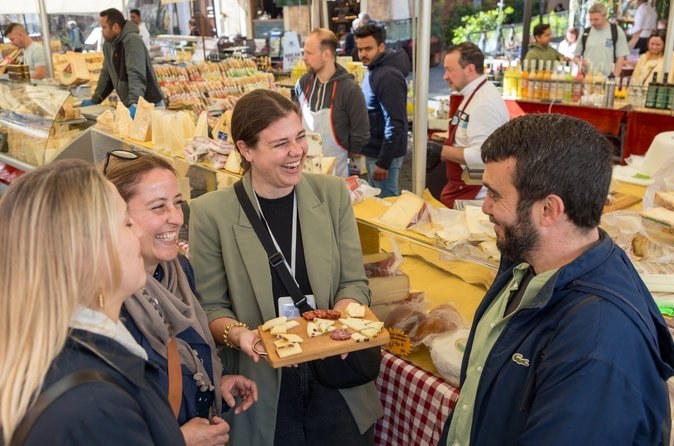
Campo de' Fiori, the Ghetto, Tiber Island and Trastevere, with fifteen tastings. Book the full option: the two-hour one leaves the Ghetto out.
From $86 per person
Check Availability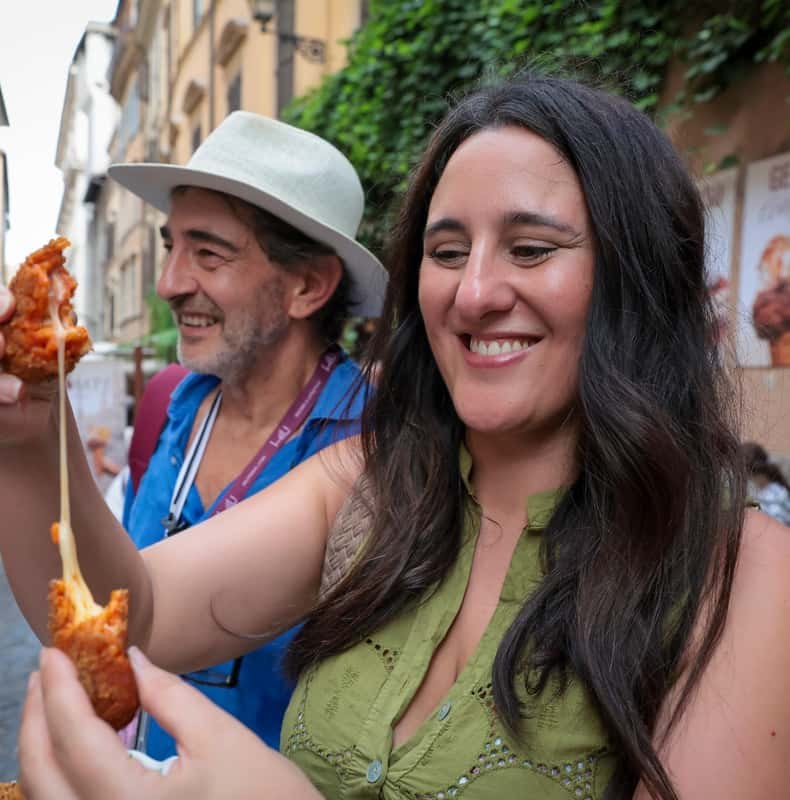
Five tastings in two and a half hours, the fried artichoke in the Ghetto among them. Drinks are not in the fare.
From $43 per person
Check Availability